In today’s digital world, we often talk about speed, convenience, and innovation. But if you ask me what truly drives sustainable growth — especially in India’s service economy — my answer is simple:
- The Invisible Crisis in India’s Home Services Sector
- Why Trust Matters More Than Ever
- The Unorganized Workforce: A Missed Opportunity
- Building a Verified Worker Ecosystem
- Trust as an Economic Multiplier
- Panchkula as a Starting Point, Not a Limit
- The Human Side of the Equation
- Verification Is Not Just Safety — It Is Respect
- Challenges in Building Trust
- The Future of Verified Work in India
- Final Thoughts: Trust is a Long-Term Investment
Trust.
Trust is the new currency.
It determines who we hire.
It determines who we invite into our homes.
It determines which platforms survive and which disappear.
And in India’s vast, unorganized home services market, trust has historically been fragile.
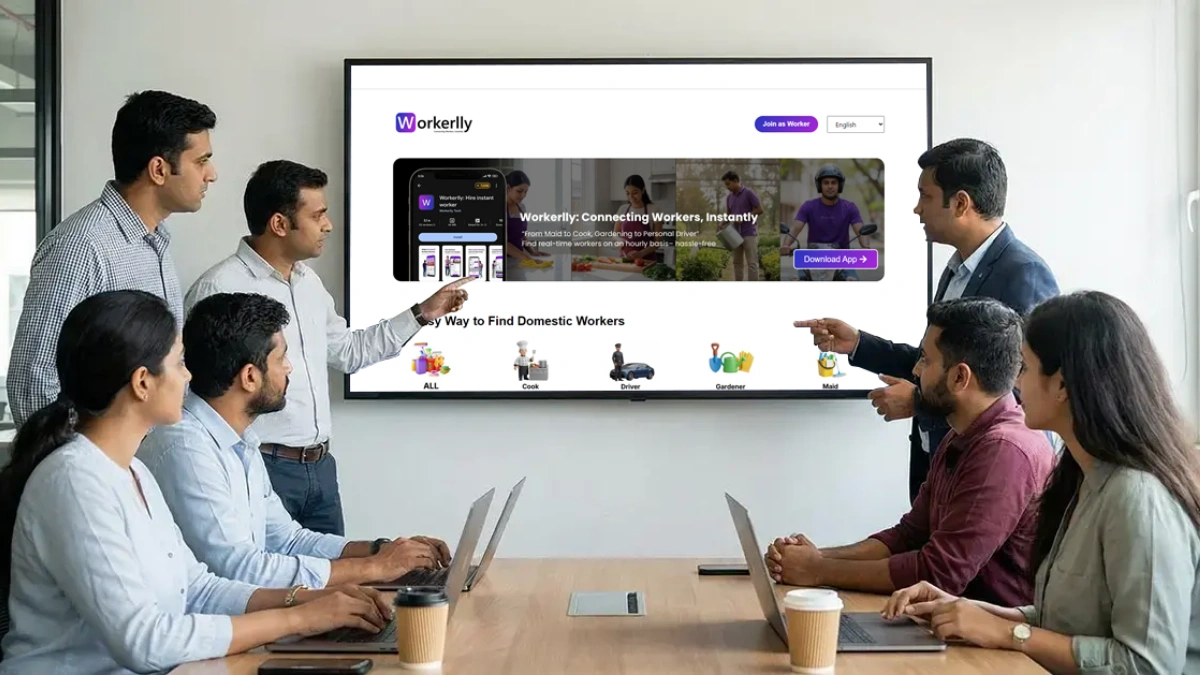
That is precisely why we built Workerlly.
The Invisible Crisis in India’s Home Services Sector
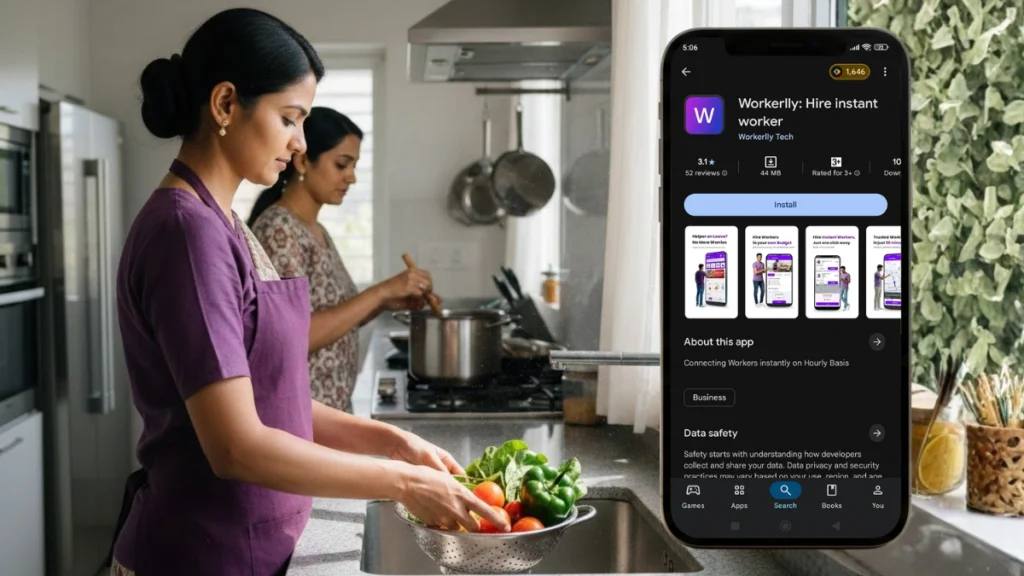
India’s urban households depend daily on electricians, plumbers, cleaners, carpenters, and other skilled workers. Yet the system connecting them remains largely informal.
For decades, the process looked like this:
- Ask a neighbor for a reference
- Call a local contact
- Hope the worker shows up
- Negotiate the price
- Pray the work gets done properly
There was no standardized verification.
No accountability structure.
No digital identity.
No structured ratings.
For customers, this meant uncertainty.
For workers, it meant instability.
This imbalance created a marketplace built on guesswork instead of reliability.
And in a country rapidly digitizing every sector — from banking to grocery delivery — this gap was impossible to ignore.
Why Trust Matters More Than Ever
In the gig economy era, platforms don’t just connect supply and demand — they create ecosystems.
But ecosystems cannot function without trust.
When a customer books a worker through a digital platform, they are not just buying a service. They are inviting someone into their private space — their home.
That requires a level of confidence that goes far beyond pricing.
Customers ask:
- Is this worker verified?
- Is their background checked?
- Will they arrive on time?
- Are their skills validated?
- Can I rely on this platform if something goes wrong?
If these questions are unanswered, the platform fails — no matter how advanced the technology.
Trust is not a feature.
It is the foundation.
The Unorganized Workforce: A Missed Opportunity
India has millions of skilled workers operating in the informal sector. These individuals possess years of practical expertise — yet they lack:
- Digital visibility
- Verified credentials
- Stable demand
- Structured income flow
- Professional identity
Without a trusted ecosystem, workers often rely on inconsistent word-of-mouth leads. Income fluctuates. Opportunities are limited by geography. Growth is accidental rather than planned.
We realized something crucial:
The problem was not skill.
The problem was structure.
And structure begins with verification
Building a Verified Worker Ecosystem
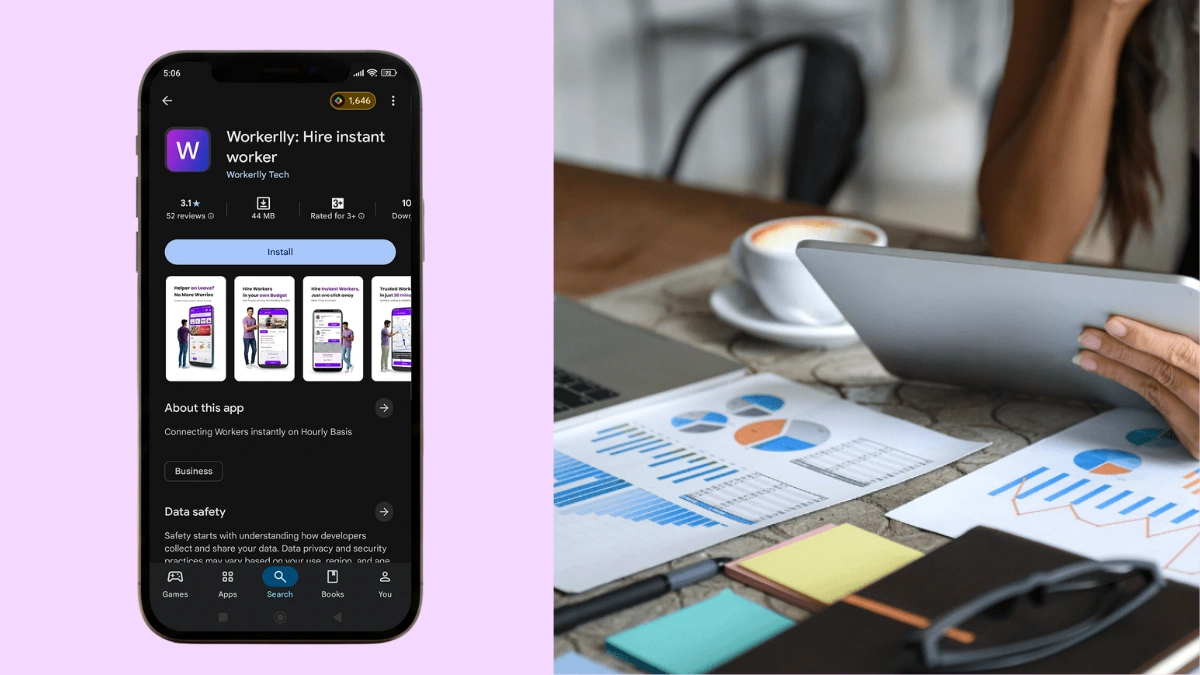
At Workerlly, we didn’t want to build just another listing app.
We wanted to build a verified ecosystem.
That meant creating a system where:
1. Workers Are Verified
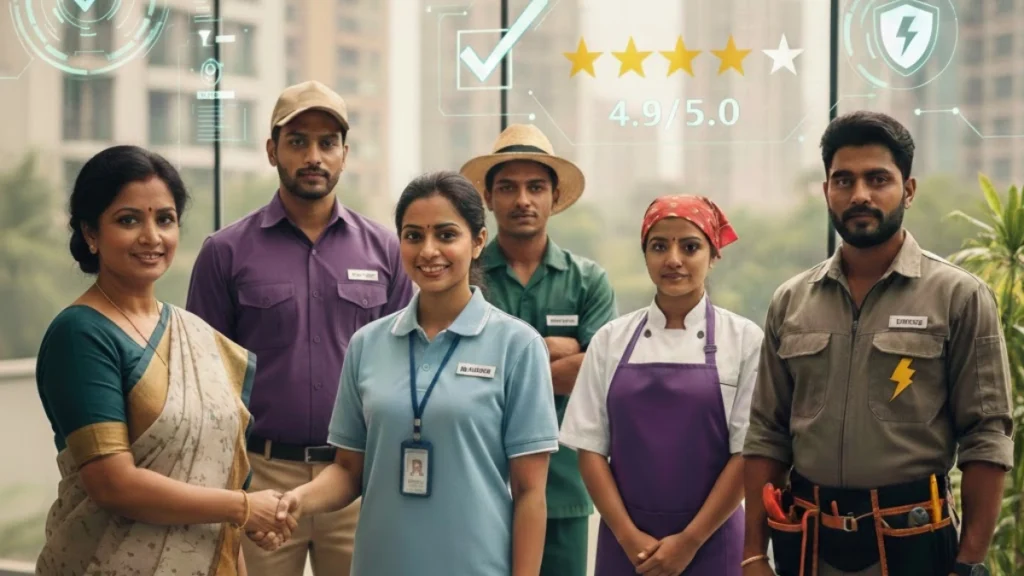
Every worker onboarded undergoes identity verification and validation processes. A verified badge is not just a symbol — it represents accountability.
2. Skills Are Recognized
Skill is dignity. Workers deserve to be recognized not as “helpers,” but as professionals.
3. Customers Feel Secure
When someone books through Workerlly, they should feel the same confidence they experience while using digital payments or booking a cab.
4. Fair Pricing Exists
Transparency eliminates unnecessary negotiation and builds mutual respect.
Verification changes behavior — on both sides.
When workers know they are part of a professional ecosystem, service quality improves.
When customers trust the system, repeat usage increases.
That is how digital trust compounds.
Trust as an Economic Multiplier
In economics, currency facilitates exchange.
Trust facilitates growth.
Here’s how trust becomes a multiplier:
- Higher retention → Customers return.
- Better ratings → Workers gain more bookings.
- Stable income → Workers improve their livelihoods.
- Positive referrals → Organic growth increases.
- Stronger brand reputation → Platform credibility scales.
Without trust, growth is expensive — you constantly spend on marketing to replace dissatisfied users.
With trust, growth becomes sustainable.
This is why I strongly believe that in India’s next decade of digital expansion, trust-based platforms will outperform convenience-only platforms.
Panchkula as a Starting Point, Not a Limit
Every movement begins locally.
By focusing on structured service delivery in cities like Panchkula, we are not limiting ourselves — we are refining the model.
Tier-2 cities are often overlooked in tech conversations. But they are where:
- Urban expansion is accelerating
- Nuclear families are rising
- Working professionals need reliable support
- Digital adoption is strong
Building trust in these ecosystems creates a replicable blueprint for expansion.
Trust built hyperlocally becomes scalable nationally.
The Human Side of the Equation
Behind every booking is a story.
A working mother needing urgent cleaning before guests arrive.
An elderly couple requiring plumbing repairs.
A young professional managing office and home alone.
Behind every service is another story.
A skilled electrician supporting his family.
A cleaner working hard for stable income.
A technician building experience to grow his career.
When trust exists, these stories intersect positively.
Without trust, they collide with friction.
Technology should reduce friction, not amplify it.
Verification Is Not Just Safety — It Is Respect
Often, verification is discussed only in terms of safety.
But I see it differently.
Verification is respect.
When we verify workers, we are telling them:
“You are not invisible. You are professional. You matter.”
And when customers book verified workers, they are participating in a structured, dignified ecosystem.
India’s informal workforce deserves this transition.
They deserve digital identity.
They deserve professional recognition.
They deserve income stability.
Trust enables that transformation.
Challenges in Building Trust
Let’s be honest — building trust is harder than building an app.
Technology can be developed in months.
Trust takes years.
It requires:
- Consistency in service
- Transparent policies
- Quick issue resolution
- Ethical leadership
- Long-term commitment
In a competitive startup landscape, shortcuts are tempting.
But shortcuts destroy trust.
And once trust is broken, rebuilding it is exponentially harder.
For us at Workerlly, trust is not a marketing tagline — it is a strategic decision.
The Future of Verified Work in India
India is at a turning point.
As digital payments became mainstream through UPI, and e-commerce became routine, the next transformation is happening in services.
The gig economy is expanding.
Urban households are evolving.
Digital literacy is rising.
The future belongs to platforms that combine:
Technology + Verification + Transparency + Dignity.
Verified worker ecosystems are not just a business model. They are an economic reform at micro level.
When structured platforms replace informal uncertainty, everyone wins:
Customers gain reliability.
Workers gain stability.
Cities gain efficiency.
The economy gains productivity.
Trust becomes infrastructure.
Final Thoughts: Trust is a Long-Term Investment
At Workerlly, our mission is simple:
To create a platform where booking a worker feels safe, structured, and seamless — and where workers feel respected, empowered, and fairly treated.
We are not just connecting households to services.
We are building a verified ecosystem where trust flows both ways.
Because in the end, technology will evolve.
Markets will shift.
Competitors will emerge.
But trust — once earned — becomes the strongest competitive advantage of all.
Trust is not a feature.
Trust is the future.
Trust is the new currency.
And we are building the ecosystem to sustain it.